PHYSICAL FACTORS
Normally physical factors will be dictated by environmental factors but limited changes to a fishery may be allowed by the appropriate Local Authority if approval is given by the Environmental Agency.
ENVIRONMENTAL ASSESSMENT
FLOW RATES AND OXYGEN
The flow rate and oxygen levels are major factors on any fishery; although there may not be strong running water, the effects of the wind movement on the water together with the oxygen levels will effect which species, and the level of each species that will exist and thrive. The classical zones (I.e. highest zone being the trout zone, next the graying zone, moving down then to the barbel zone and finally the slow moving bream zone) are important not only for the speed of the zone but usually more importantly for the levels of oxygen needed by the different species. Trout and grayling need particularly high levels of oxygen. If they are stocked into waters with too low a level of oxygen they will not survive in the longer term. Before the close season was abolished on the still waters, a number of Associations stocked their waters with trout to provide all year round fishing. Most initiatives failed as the levels of oxygen and suspended solids at certain periods throughout the year were unsuitable for t he species. . A similar problem can arise with barbel if the water does not have aeration, when it is needed. A good oxygen meter is essential for effective management of the fishery, providing supplementary oxygen when necessary.
A number of waters have introduced aeration (solar or electrical) supported by timer systems to increase oxygen levels but it can increase suspended solid levels, which need regular monitoring.
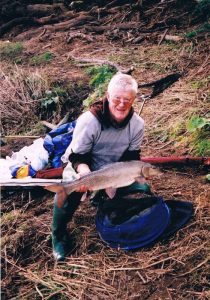
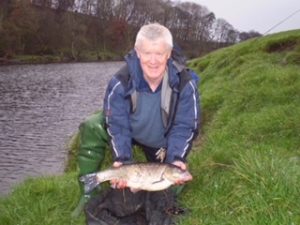
Chub can also thrive in smaller moving waters, providing there is adequate oxygen levels; the waters do not have to be wide or particularly fast flowing, perhaps brooks flowing around the main fishery water, can support chub, barbel, perch and roach. Consider any brook or stream running around your fishery for the potential to provide for angling with a little difference on moving water. However, smaller brooks are susceptible to pollution, so ensure that you are aware of all inflows and outflows so that action can be taken immediately in any cases of pollution. However, it will always be difficult to replicate a fishery that can produce the natural specimens of their natural environment,
SIZE, SIZE AND DEPTH OF WATER
The size of the water is in many cases a major limiting factor in the growth of some species, particularly the larger species; bream in particular appear to prefer larger expanses of deeper water. Our Association has two or three waters containing bream. The smallest water has only 2 acres of open waters with a depth of only 3 or 4 feet, where bream normally grow to a weight of 4 or 5lbs. Whilst the largest water is over 200 acres with a depth of up to 15 feet: it produces double figure fish, regularly . Ideally the water should have a range of depths, the deeper water for the larger fish to escape predatory birds, warmth in winter, etc., but also shallow water for spawning and the development of fry to grow into larger specimens, or become prey for perch or pike to provide good specimens as part of the food chain.
WATER FEATURES
Reeds and tree roots, although sometimes an inconvenience to anglers. can be of value to certain fish species; perch to aid their predation on fry and smaller fish; tench and carp to search for invertebrates and worms. Plants and floating aquatic weed also attract all species during the spawning periods, particularly tench and carp. .Aquatic plant life also plays a major role in the aquatic environment by producing oxygen. particularly during hours of sunlight, they can also help improve the quality of the water by absorbing nutrients, Trees and reeds also influence the water temperature, particularly around the margins by making more stable the shorelines. Aquatic plants do, however, need some degree of management (e,g, weedkiller, water colouring, etc. to contol plant growth,.)

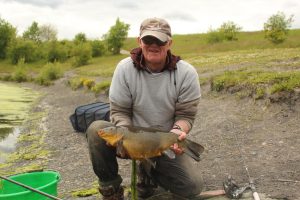
IN THE SUMMER MONTHS TENCH LOVE THE AQUATIC AREAS FOR SPAWNING
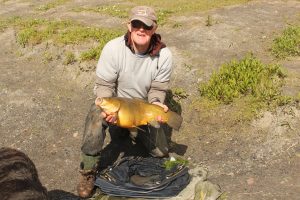
TENCH 7 AND 8 LBS + CAUGHT IN SPAWNING, WEEDY AREAS
WEED GROWTH
Weed growth can become a problem in any fishery. For low level growth manual removal may be the best way to remove such growth. However, for extensive weed growth then either water colouring to block the sunlight reaching the weed or weedkiller is a possibility. Do not use these options, however, without expertise as the results can be devastating.
INFLOWS AND OUTFLOWS
Any aquatic environment is influenced by the land and water surrounding it. Inflows and outflows should be regularly checked and maintained. This involves enthusiastic members who are prepared to give up their time, arranging working parties to complete the necessary maintenance. Funds should be made available for equipment and materials as and when it is needed.
PREVAILING WIND DIRECTION
Obviously wind direction will vary from day to day but the prevailing wind direction will determine which shores need ongoing support and which can be left to the elements. Always consider which shores are in most need of support.
I